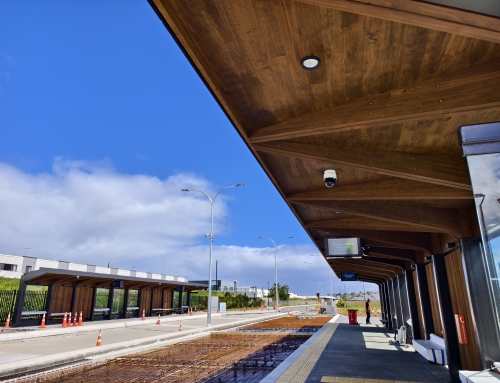
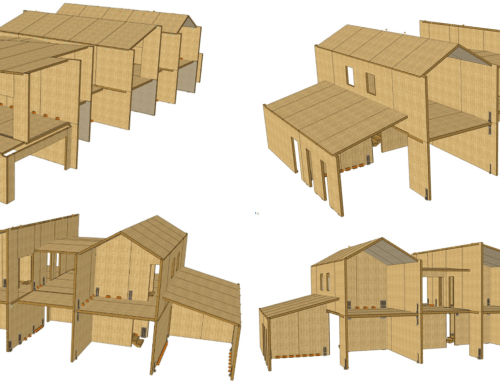
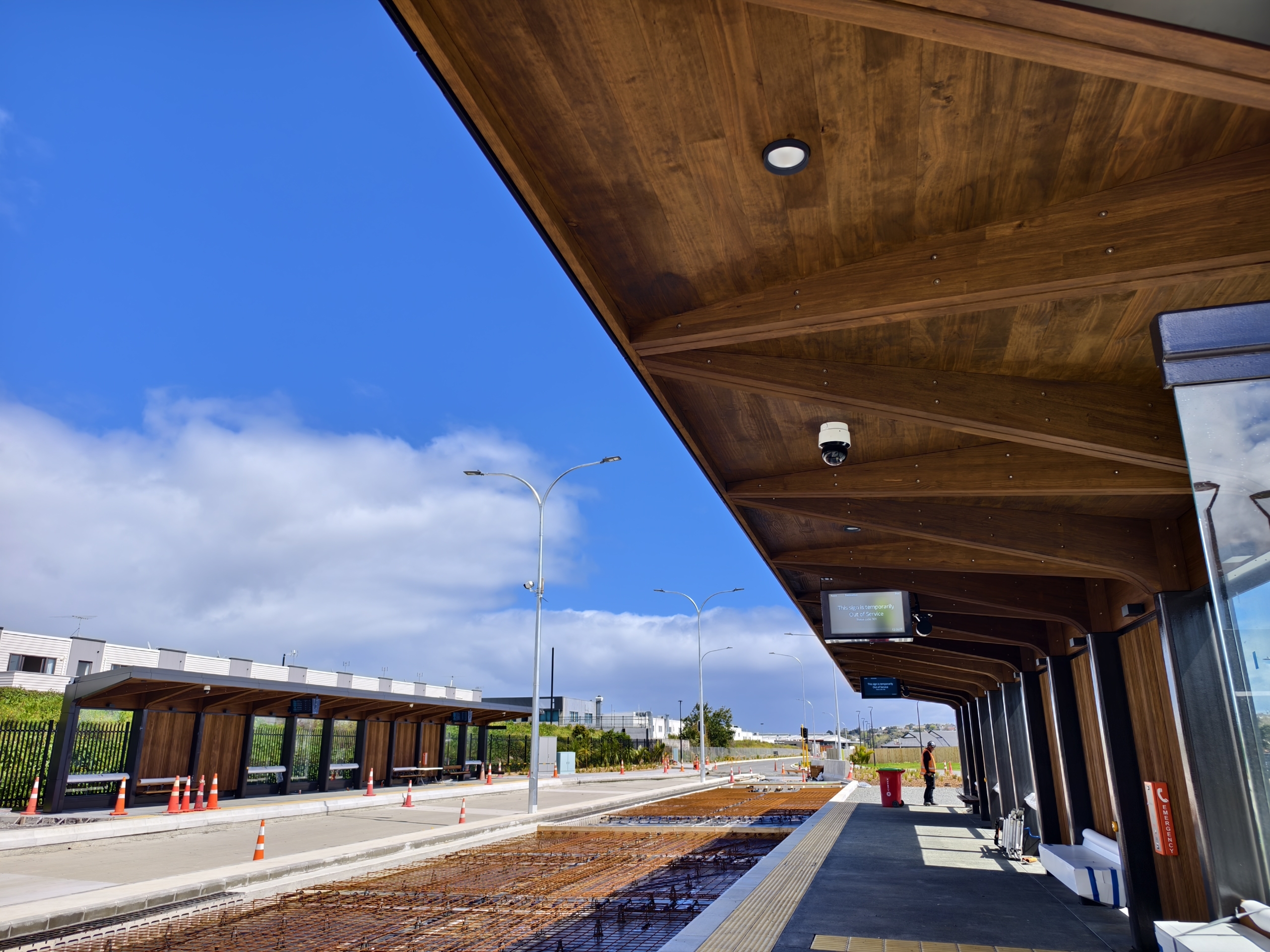
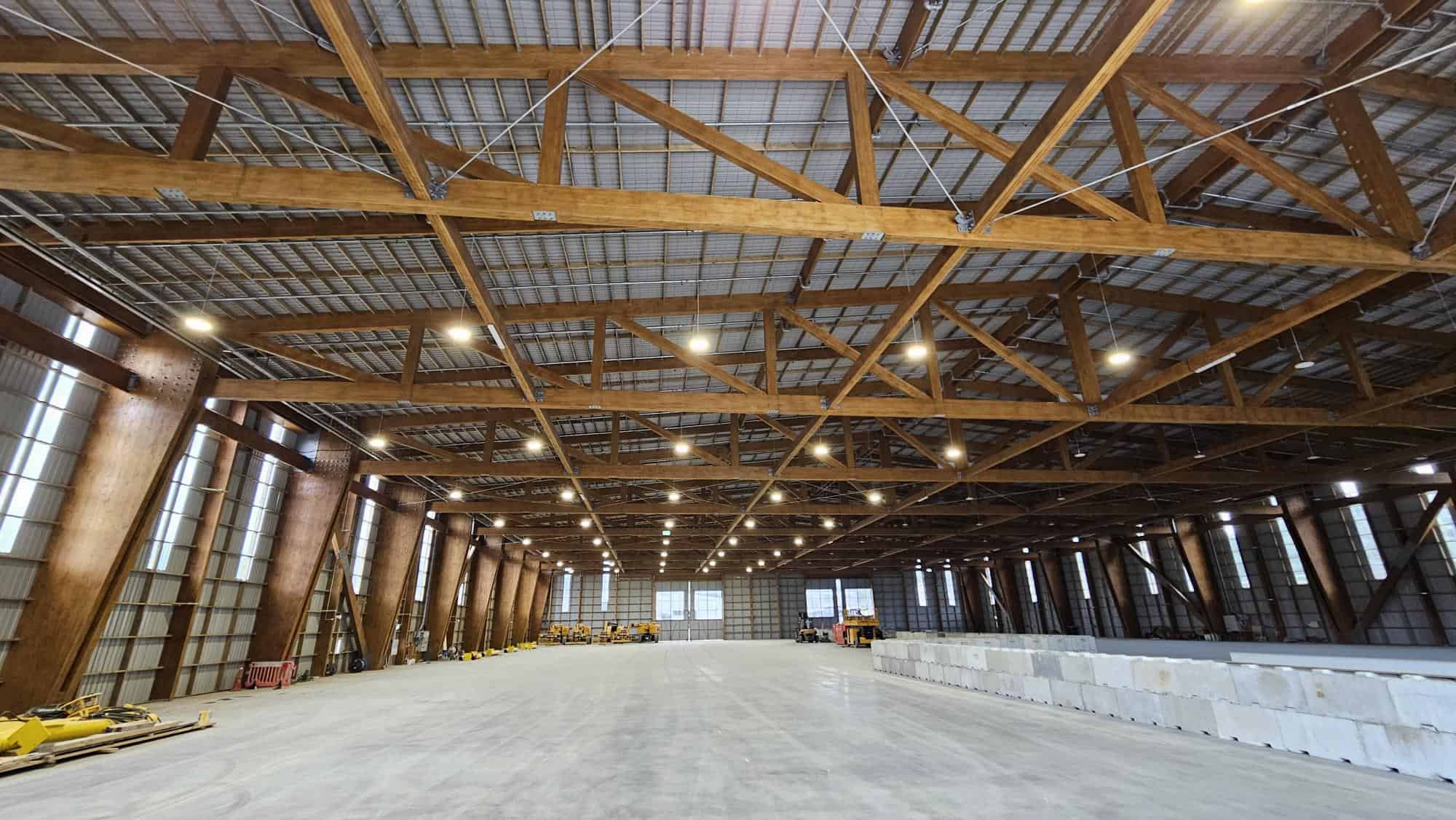
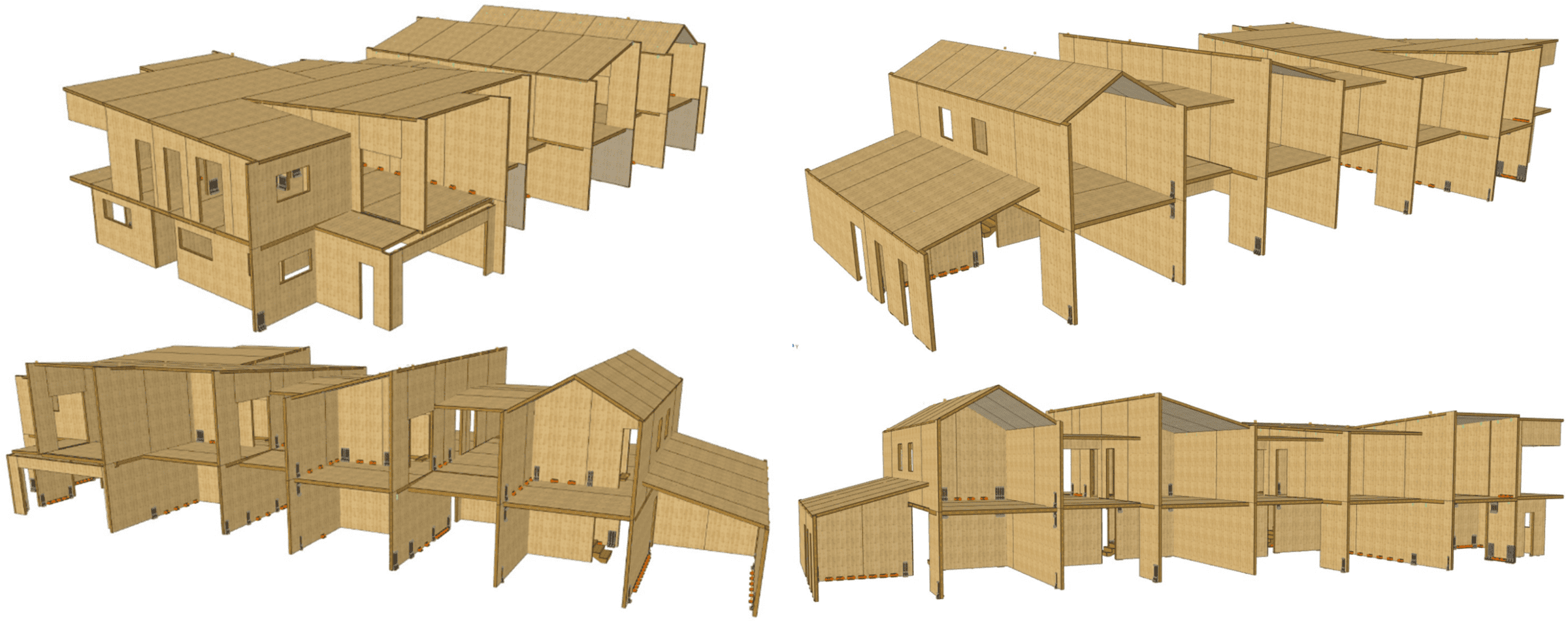
Red Stag TimberLab (RSTL) has developed two innovative engineered timber products: Vertix and GLTₕ as part of its Glulam 2.0 initiative. Created to address the cost challenges associated with traditional bespoke glulam, these products combine the structural benefits of glulam with the efficiency and automation typically associated with Cross Laminated Timber (CLT) production.
The development of Vertix and GLTₕ represents a strategic shift towards standardised, high-volume manufacturing capable of supporting the wider adoption of mass timber in mainstream commercial construction.
Up to 25-30% Cost Savings
Through standardised, automated production, Vertix and GLTₕ can reduce costs by up to 25–30% compared with traditional glulam for suitable applications while retaining the structural and sustainability benefits of engineered timber.
The Challenge
Traditional glulam has long been valued for its design flexibility. It can be manufactured in a vast range of sizes, geometries, treatment levels, finishes, and structural grades. While this flexibility is advantageous for bespoke projects, it creates significant manufacturing complexity.
Challenges associated with conventional glulam include:
Requires flexible manufacturing capability.
Bespoke setups and takedowns.
Lower automation potential from higher labour requirements.
Manufacturing downtime to adjust plant and equipment.
Real-estate and handling constraints which reduces capacity and adds to cost.
Solution: Glulam 2.0
To overcome these limitations, Red Stag TimberLab invested more than two years in developing a next-generation manufacturing process. By leveraging the company’s highly automated CLT production capability and applying alternative board layup methodologies, RSTL created a family of products that deliver glulam-like performance at manufacturing costs closer to CLT.
The resulting products are:
Vertix – Vertical lamella orientation.
GLTₕ – Horizontal lamella orientation.
Both products are manufactured using longitudinal boards laid into a vacuum press, glued using PUR adhesives, and cured using production methods similar to CLT manufacturing.
Vertix™: Efficient Deep Structural Members
Manufacturing Method
Vertix utilises a vertical lamella orientation where longitudinal boards are laid into a large-format vacuum press measuring 4.5 metres wide and 16.5 metres long. Once cured, the panel is rip-cut into structural members.
Key characteristics include:
Vertical grain orientation.
Large panel-based manufacturing.
Rip-cutting to create structural beams and columns.
Reduced manufacturing complexity through standardisation.
Size Capability
Vertix offers exceptional flexibility for deep structural members:
Depth: 88 mm to 4.5 m.
Width: 88 mm to 420 mm.
Length: up to 16.5 m
This makes it particularly suitable for:
Long-span beams.
Primary structural frames.
Commercial and industrial buildings.
Mass timber structures requiring efficient repetitive elements.
GLTₕ™: Efficient Wide Structural Elements
Manufacturing Method
GLTh adopts a horizontal lamella orientation while retaining the same automated panel-based production methodology. After curing, the panel is cut into members where the panel thickness becomes the final member depth.
Size Capability
GLTh is optimised for wider structural components:
Depth: 88 mm to 420 mm.
Width: 88 mm to 4.5 m.
This makes it particularly suitable for:
Columns
Shallow transfer beams
Short span roof structures
Mass timber structures requiring efficient repetitive elements.
Certification and Compliance
The products have undergone independent third-party verification to satisfy AS/NZS 1328.1 production requirements.
Key milestones include:
Third-party certification completed.
Formal CodeMark approval received.
Manufacturing aligned with recognised Australasian timber standards.
This provides confidence to engineers, architects, builders, and consenting authorities when specifying the products in commercial projects.
Stategic Impact
Red Stag TimberLab’s dual-factory model, combining bespoke glulam production with highly automated, standardised manufacturing, allows the company to serve both architecturally complex projects and large-scale, mainstream commercial developments. This approach mirrors successful European mass timber manufacturing models and positions timber as a viable structural solution beyond feature elements, enabling wider adoption across offices, industrial buildings, education facilities, and multi-storey developments.
Conclusion
Vertix and GLTh demonstrate how innovation in manufacturing can unlock the next phase of mass timber growth. By combining glulam performance with CLT-style production efficiency, Red Stag TimberLab has developed products that address one of the industry’s most significant barriers: cost competitiveness at scale. As the construction industry seeks lower-carbon, high-performance alternatives to traditional materials, Vertix and GLTh provide a compelling pathway for making engineered timber a mainstream structural solution across New Zealand and beyond.
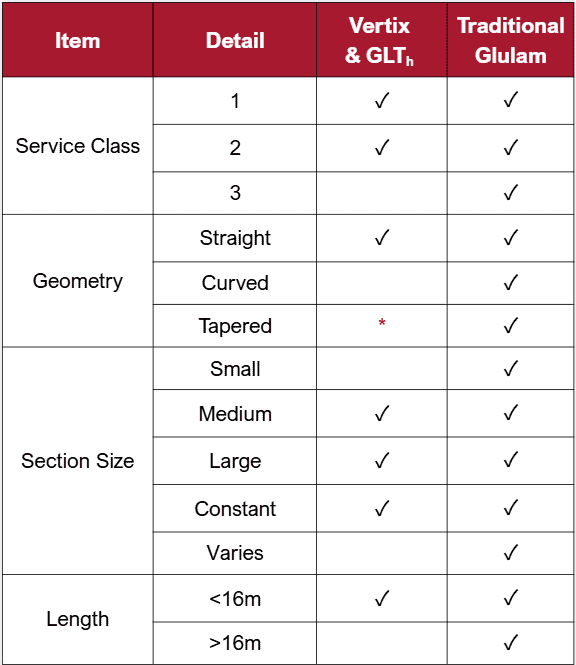
* Needs symmetrical pairs to minimise waste.
Contact the Red Stag TimberLab team to discuss how you can include mass timber in your upcoming project.