
Project Description

Living Pā
Project Description
CREDITS: Client: Te Herenga Waka – Victoria University of Wellington / Builder: LT McGuinness / Architect: Tennent Brown Architects / Structural Engineer: Dunning Thornton Consultants / Products: CLT and Glulam
The Project
New Zealand
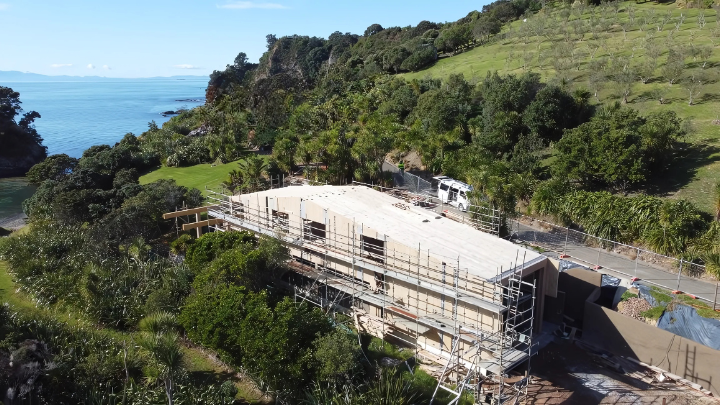
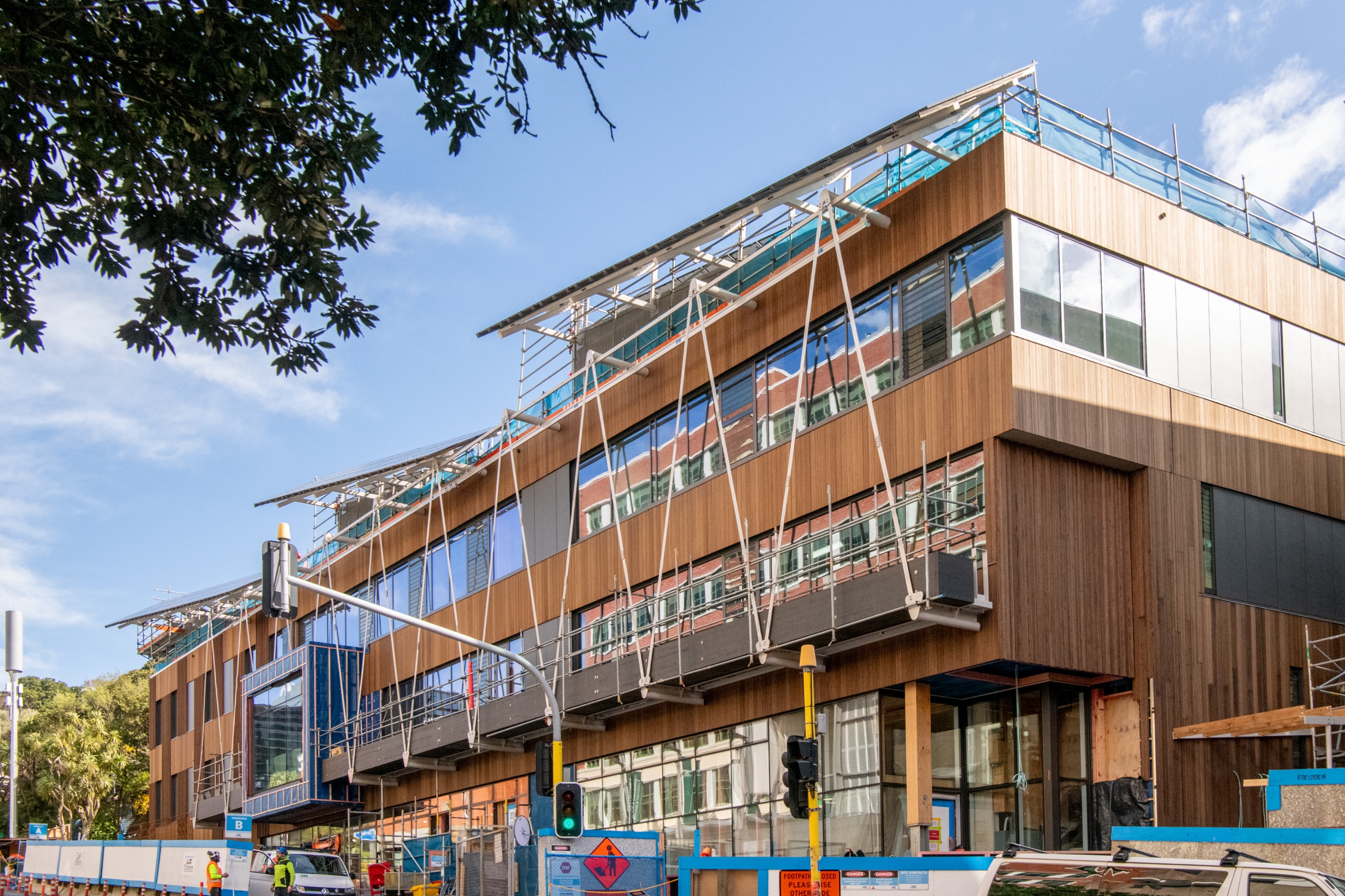
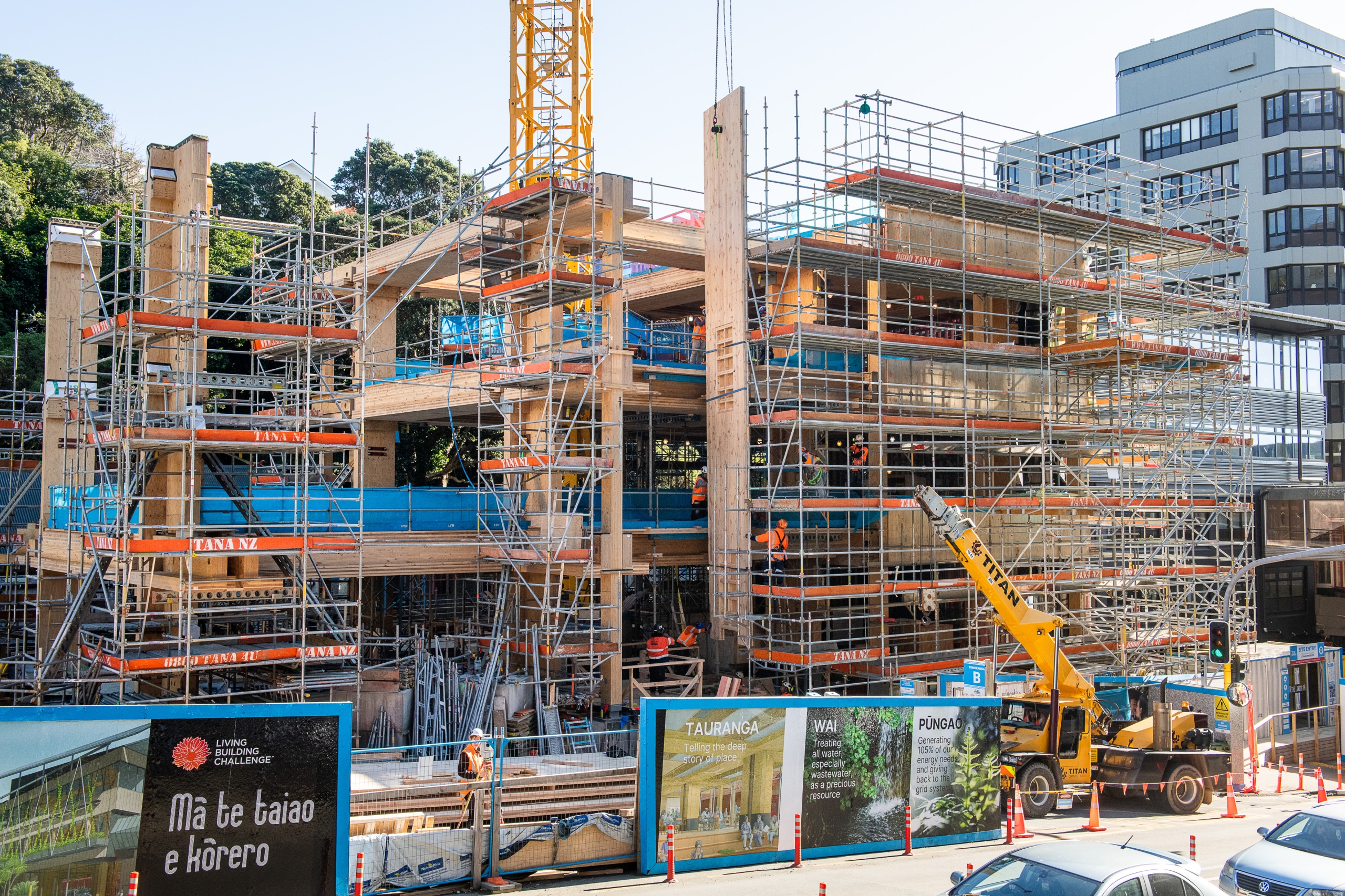
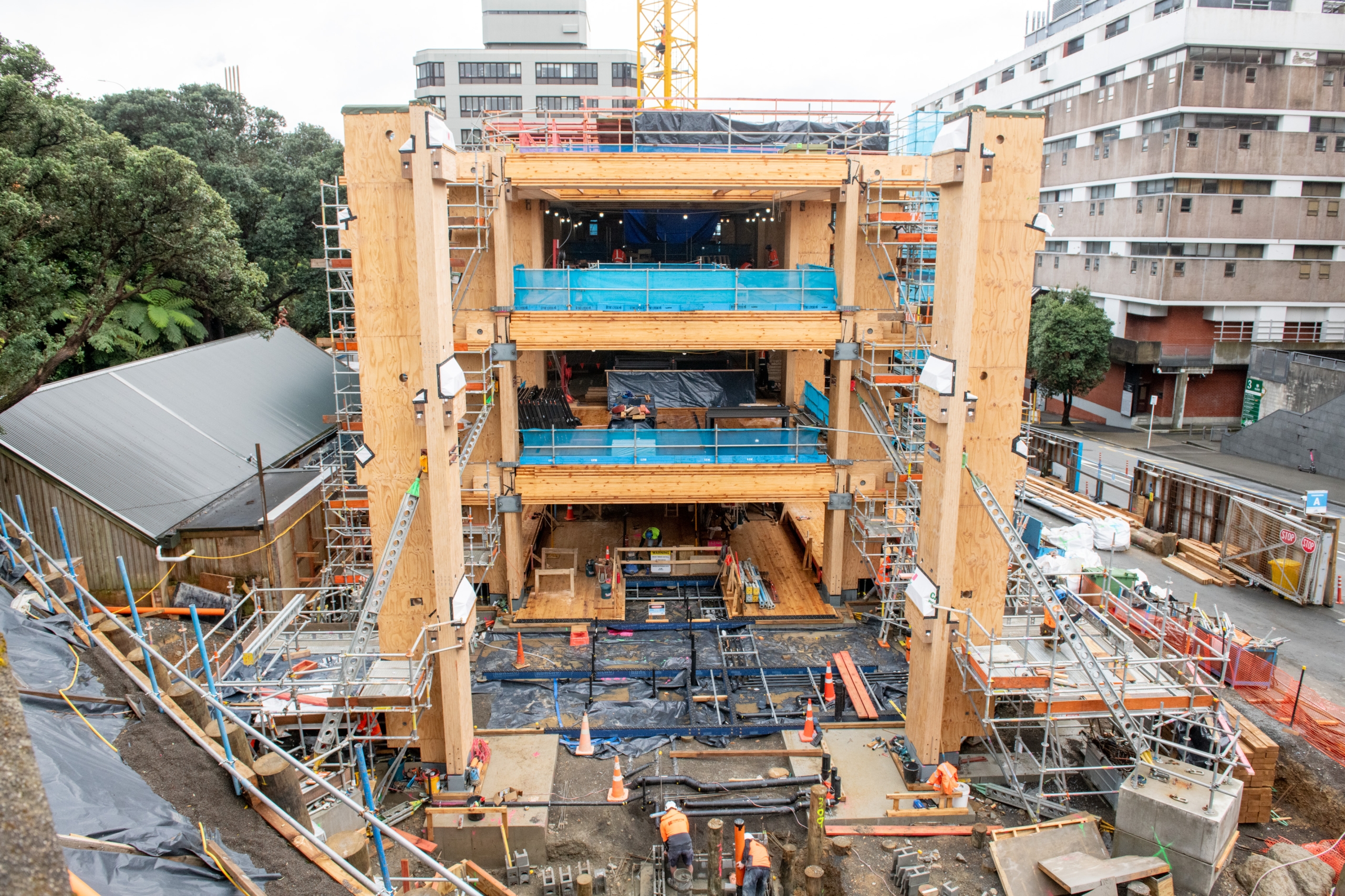
Red Stag TimberLab, New Zealand’s leading supplier of mass timber solutions, played a pivotal role in the Living Pā project. The project involves the redevelopment of a pan-tribal, university-based marae, incorporating a new 3000m2 mid-rise structure alongside the existing wharenui. This expansion aims to enhance marae engagement and teaching spaces while embodying Māori values and achieving stringent sustainability certification under the Living Building Challenge.
In particular, the design parameters for CLT pushed the known boundaries of capability and manufacture, and Red Stag TimberLab is proud to have worked with all stakeholders to achieve spectacular results.
Innovation
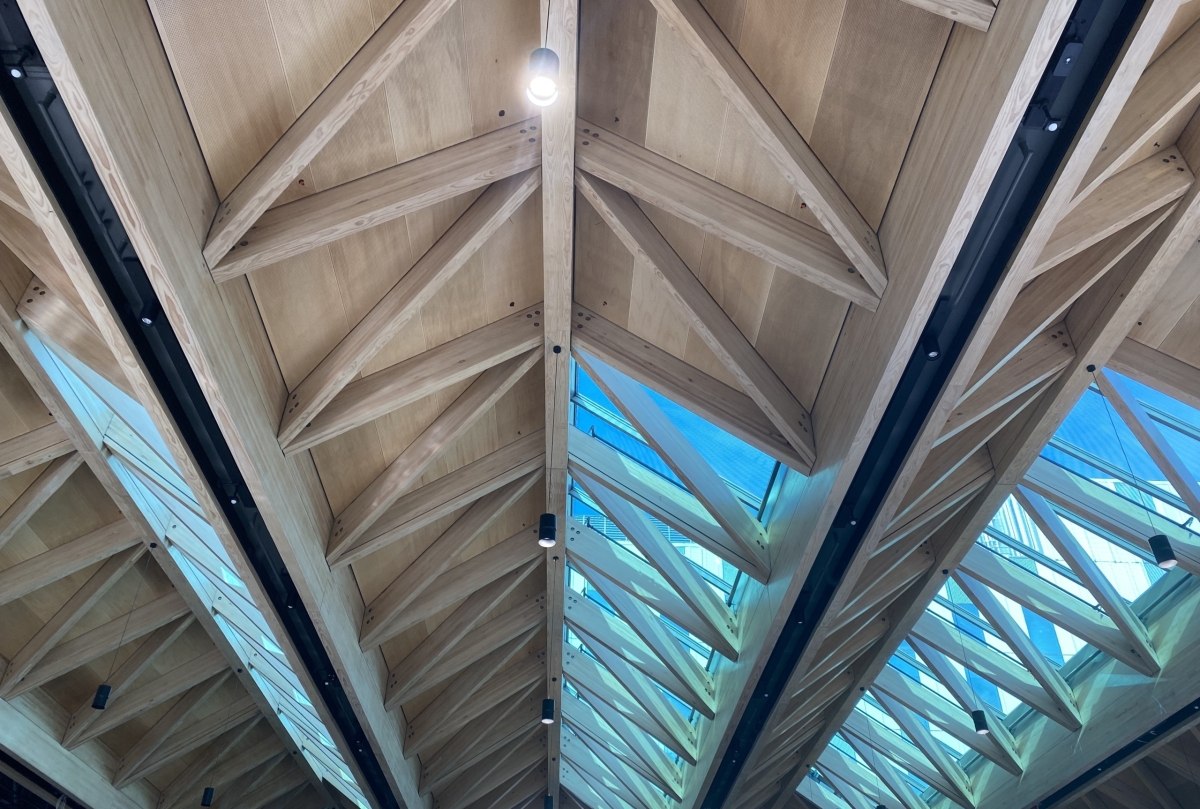
Red Stag TimberLab supplied several Engineered Wood Products to the Living Pā project. CLT panels, GLT beams, and composite sections were used for various structural elements including floors, roofs, beams, columns, stairs, and lift shaft walls.
The project includes many innovative sections and structural elements such as CLT-GLT composite T-beams, CLT-LVL reverse T-beams, and CLT-GLT box beams to support large-span CLT floors. The use of CLT-Glulam box beams is particularly noteworthy, facilitating expansive open spaces within the building. These beams, spanning nearly 9 metres, are essential for supporting significant loads. The structure is designed to carry large combinations of imposed and dead load for educational use.
Full-Scale Prototype Testing
Due to the novelty of the design and complex structural system, Red Stag TimberLab carried out full-scale testing on the CLT-GLT composite beams to ensure structural performance aligned with the engineer’s design parameters. Sustained load was applied to the elements for more than 3 months in Red Stag TimberLab’s factory to assess the long-term structural performance of the beams aligned with the design criteria.
Digital Fabrication
Red Stag TimberLab was selected for its expertise in providing sustainable timber solutions and digital modelling capabilities. Red Stag TimberLab utilized its advanced digital fabrication technologies to design and manufacture CLT and Glulam components tailored to the specific structural requirements, ensuring high precision and quality.
The accurate CNC digital fabrication process, and the timely delivery of products to the building site facilitated smooth coordination, and a rapid assembly process.
Prefabrication
The lightweight properties of mass timber allow for easy transportation and machining, making offsite prefabrication an attractive option. This prefabrication approach significantly speeds up the construction process. For example, the CLT composite panels were prefabricated into 7.2 x 3.0m sections at Red Stag TimberLab’s Rotorua factory. These panels are then quickly installed on-site, providing immediate usable floor spaces without temporary propping. This presents a major improvement over conventional concrete floor construction, which typically requires extensive propping and several days to set.
Red Stag TimberLab CLT lift shaft panels were utilized in the project to assist with the rapid installation programme. CLT lift shafts can be erected faster and easier than similar steel and concrete alternatives while providing exceptional lateral bracing for the building. Elevator and stair shafts can comfortably achieve a one-hour fire resistance rating when using a 126 mm thick (or greater) three-layer Red Stag TimberLab CLT panel.
The design also includes the integration of large Glulam planters on the building’s second floor which were CNC fabricated for all penetrations and connection details. These planters, suspended from steel tubes at the roof level and braced by CLT spandrels, not only connect the structure to the surrounding natural environment but also demonstrate Glulam’s versatility and aesthetic appeal.
Living Building Challenge
The Living Building Challenge (LBC) represents the most advanced sustainability accreditation program currently present in our built environment. It promotes developments that have a “truly regenerative” impact on the environment. The stringent green building guidelines necessitate net-zero energy and water, as well as strict waste and toxicity limits for all building components. Unlike other certifications that seek to minimize negative environmental impacts, the LBC promotes a philosophy of positive outcomes. A Living Building should have a positive impact on the environment, its inhabitants, and the broader ecosystem. In other words, the world should be in a better state after the development than it was previously.
The Living Pā is aiming to achieve Living Building Certification which will be assessed and granted after the building has been operational for a 12-month period to prove performance in terms of energy and water use.
Environmental Certification
To be considered as a key supplier for a Living Building project, Red Stag TimberLab has achieved the following environmental credentials:
FSC Certification
Red Stag TimberLab holds Chain of Custody Certification Code NC-COC-005630 for the supply of FSC® certified timber. Material is sourced from renewable NZ Radiata plantation forests that are sustainably managed and recognised as contributing environmental benefits as opposed to steel and concrete and scarce rain forest hardwoods.
With FSC certification, we have the proof that our raw materials are obtained from sustainably managed forests, that sourcing of the raw materials is internally monitored and that conditions connected to external monitoring by third parties are fulfilled.
Declare Certification
The Living Building Challenge is made up of 20 imperatives grouped into 7 different “Petals”. Red Stag TimberLab CLT and Glulam is associated with the “Materials Petal” (Petal 5) which aims to create a materials economy which is non-toxic, ecologically restorative, and transparent.
Declare certification is a transparency tool created to support the LBC to declare all chemical components within products. Declare is essentially a “nutrition label” for products which becomes part of a publicly accessible database of building materials. Red Stag TimberLab is proud to have received Declare certification (Living Building Challenge Red List Approved) for; H1.2 Glulam for interior use and H3.2 MCA Glulam for exterior use.
Environmental Product Declaration (EPD)
An Environmental Product Declaration (EPD) is a robust, science based, independently verified and standardized method for communicating the environmental impacts of products. Red Stag TimberLab’s EPD’s are based on a cradle-to-gate Life Cycle Assessment (LCA), with end-of-life options included. ‘Cradle’ refers to the raw material extraction and ‘the gate’ is the boundary of the manufacturing factory as the product is being dispatched to customers.
Carbon Sequestration
The Living Pā project, spanning four levels, required a total volume of 1131m³ of Engineered Wood Products (EWP). This included Red Stag TimberLab’s supply of 858 m³ of Cross Laminated Timber (CLT) and 115 m³ of Glue Laminated Timber (GLT).
The Living Pā project showcases the significant positive environmental effect of replacing steel and concrete elements with EWPs. Red Stag TimberLab’s contribution to the project (858m3 of CLT and 115m3 of GLT) has an estimated carbon sequestration of 687 tonnes of CO2eq.