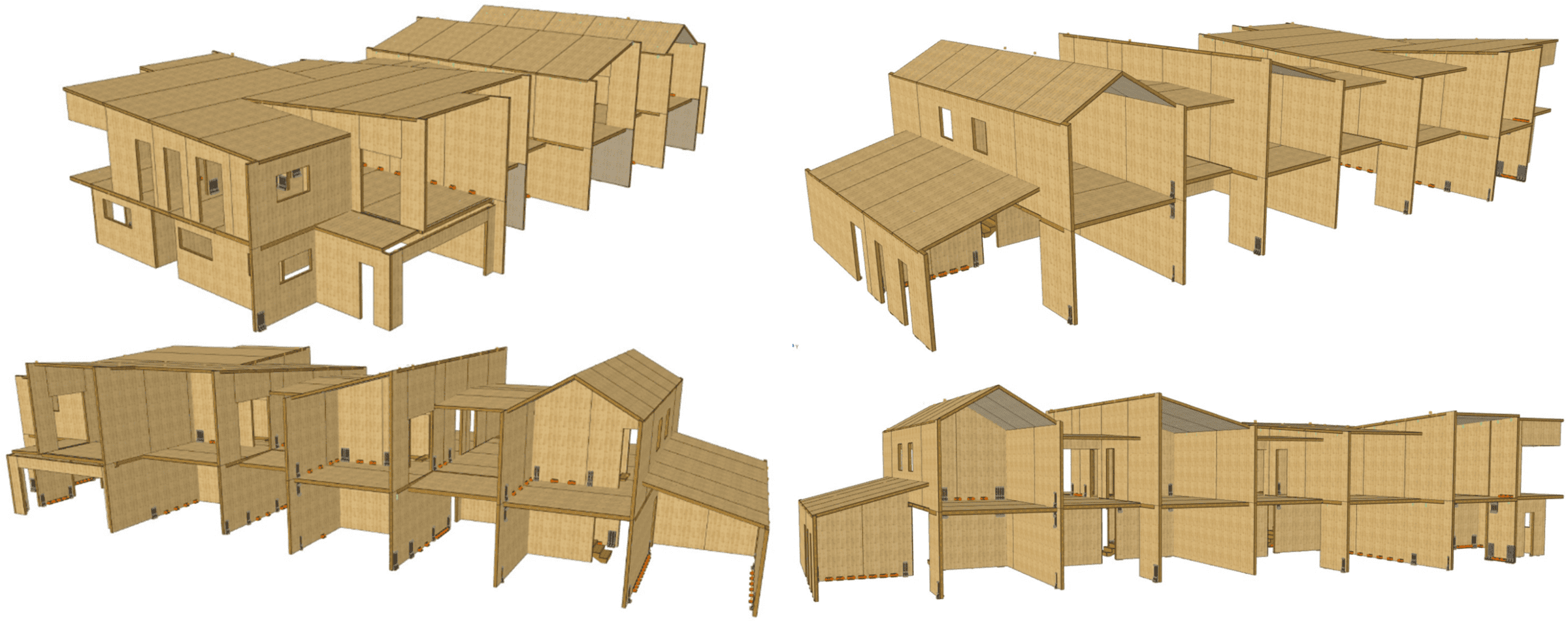


Image credit: One to One Hundred & Studio Pacific Architecture
Project Overview
The Museum Street and Ballantrae Place buildings form part of the Future Accommodation Strategy (FAS), a major programme to upgrade and modernise New Zealand’s parliamentary infrastructure. The development provides new, high-performance offices to support the evolving needs of Parliament, with a strong focus on sustainability, resilience, and long-term adaptability.
The Museum Street Building (MUS) is a six-storey, Importance Level 4 structure designed to accommodate approximately 600 occupants, including Members of Parliament and parliamentary staff. The Ballantrae Place Building (BAL) is a two-storey facility focused on improving logistics, operational efficiency, and security for the wider Parliamentary Precinct.
Red Stag TimberLab's Involvement
Spanning nearly two years of design development, coordination, and advanced manufacturing, the Parliamentary Services project represents one of Red Stag TimberLab’s most significant and technically demanding mass timber deliveries. The scale, repetition, and precision required across both buildings demanded exceptional digital coordination and factory execution.
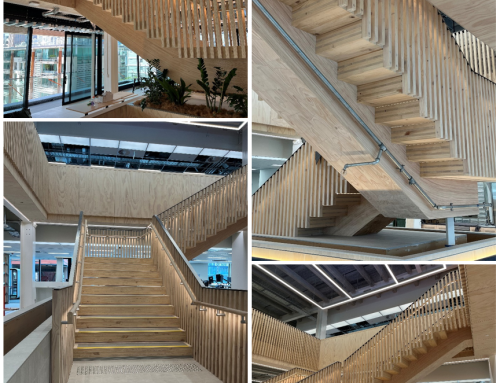
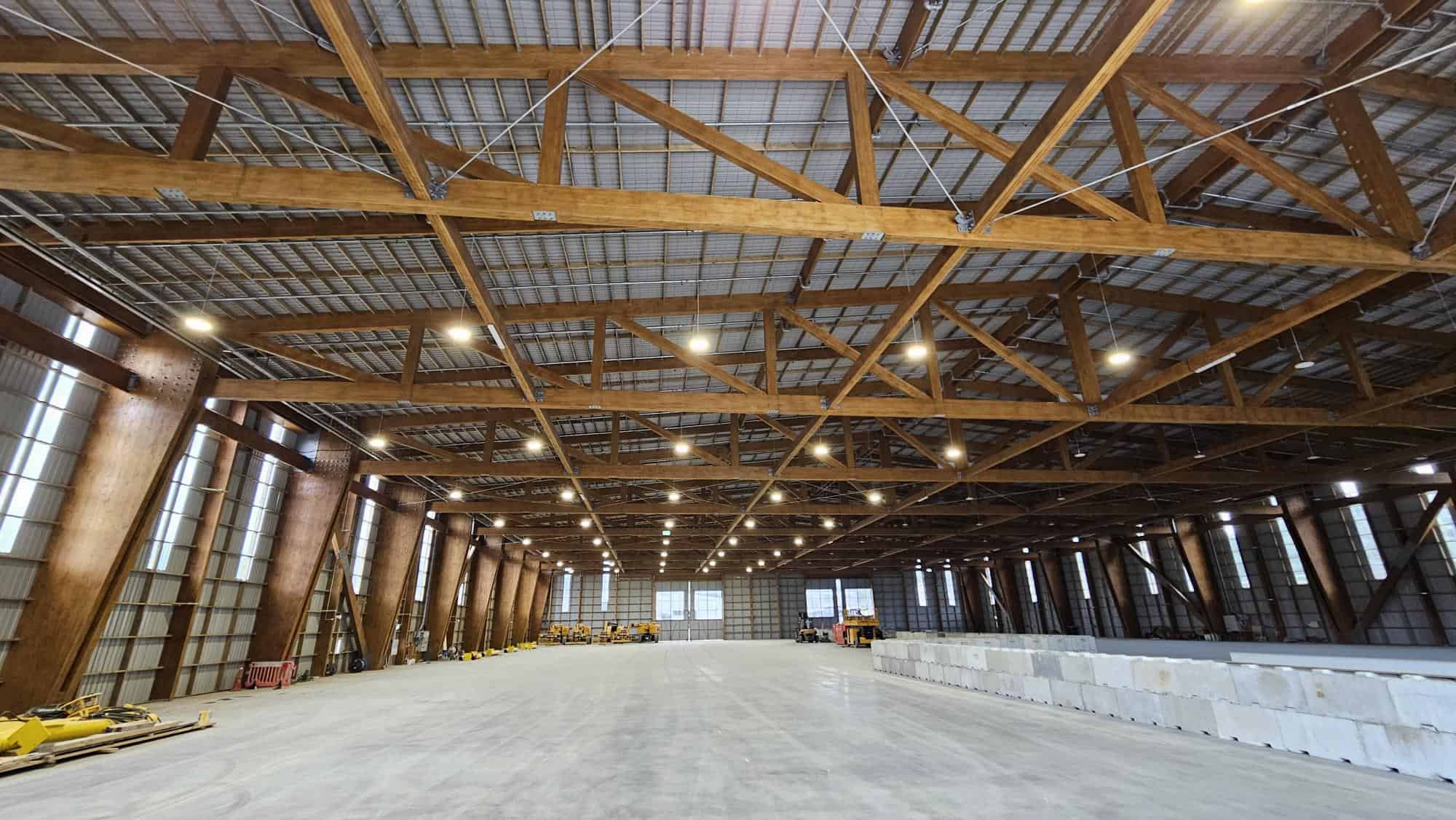
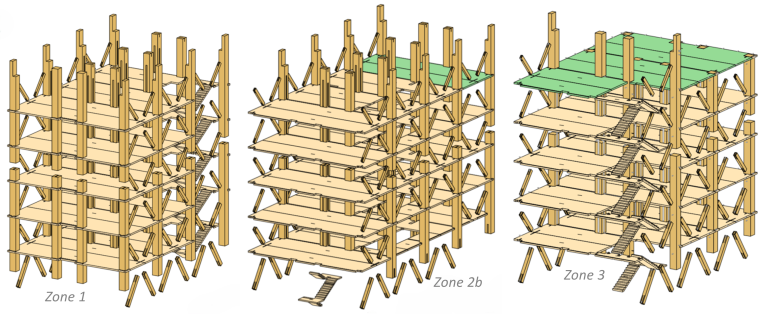
Red Stag TimberLab (RSTL) supplied primary mass timber structural elements for both buildings, including Glulam columns, and braces, and Cross Laminated Timber (CLT) floors and stairs.
- Total finished Glulam volume: 754 m³
- Total CLT volume: 1,206 m³
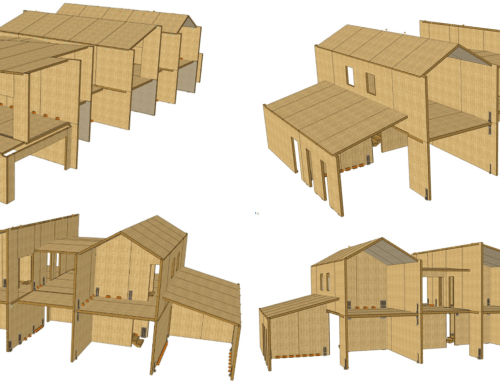
RSTL worked closely with Offsite Design, who assisted in the detailed 3D modelling process to ensure coordination accuracy, tight construction tolerances, and seamless integration with other trades.
Full Scale Prototype Testing
Given the strict performance requirements, RSTL constructed two full-scale prototypes to validate design and manufacturing assumptions prior to production.
- Moisture & Durability Prototype
A full-scale sample was exposed to weather for several months to assess moisture performance, determine the most suitable protective coating systems, and to confirm appropriate construction tolerances. - Base Connection Prototype
A second prototype tested the column base connection methodology to ensure the manufacturing and installation approach could consistently achieve the tight construction tolerances.
This proactive testing reduced risk and provided confidence in the installation accuracy.
Prefabrication, Installation, and Connection Complexity
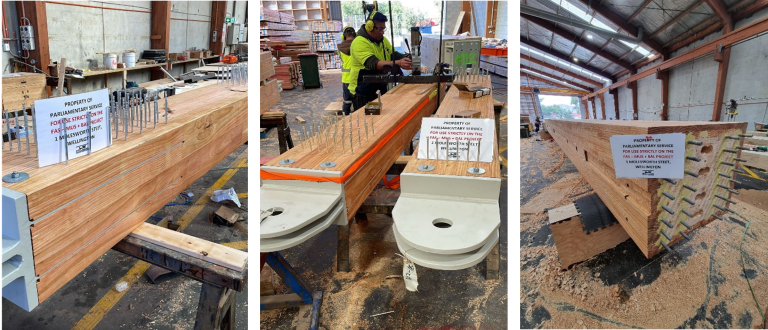
To streamline on-site construction, Glulam columns and braces were prefabricated and pre-installed with steel brackets at RSTL’s facility. This significantly simplified installation, improved build accuracy, and reduced time spent working at height on site. A key area of complexity in the project was the design and execution of the connection systems. The structure required a high density of engineered fixings to manage compression load transfer in the post tensioned frames and to reinforce the timber perpendicular to the grain orientation at connection junctions.
In total, the Glulam components incorporated 1,149 threaded rod (RTR) connections, over 33,000 structural screws, and more than 34,000 self-drilling dowels, each of which needed to be precisely 3D modelled to ensure streamlined installation.
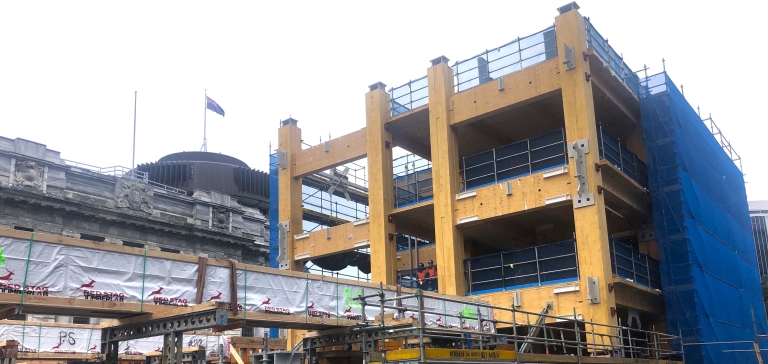
In addition, the timber frames were post-tensioned; a highly technical structural solution, particularly for performance in seismic environments. This required multiple CNC-precision penetrations within the glulam columns to allow post-tensioning bars to be accurately installed and integrated into the structural system.
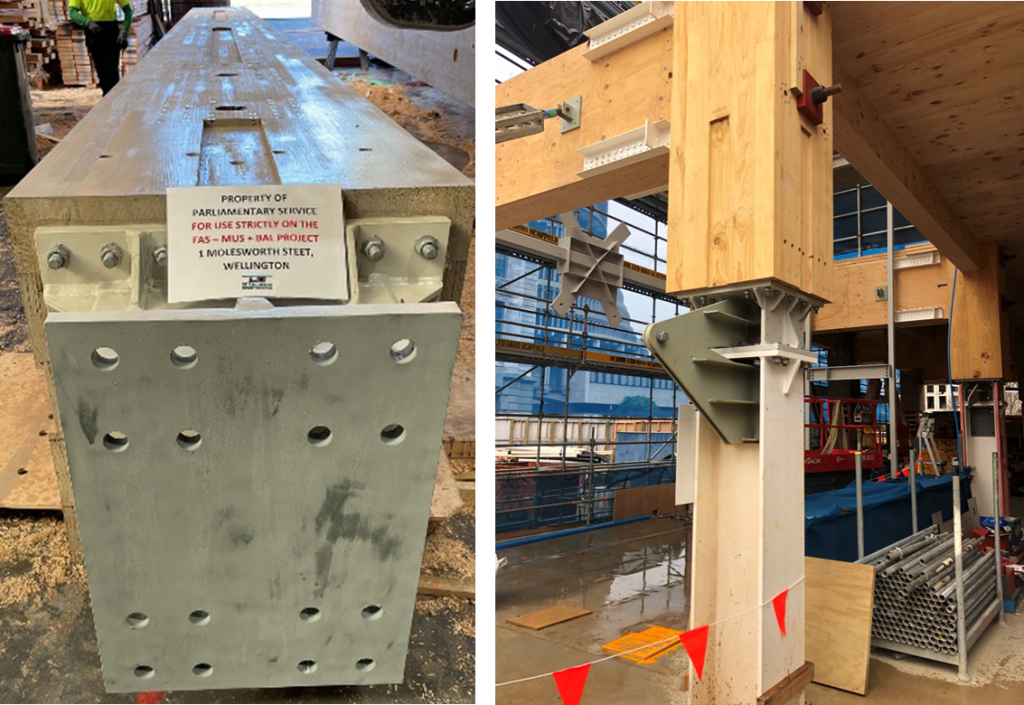
The scale and density of the structural connections in the mass timber frames highlights the level of engineering integration and detailing required to deliver the project successfully.
Sustainability and Renewable Energy
The project’s commitment to sustainability is evident through the substantial use of mass timber. As New Zealand’s lowest-carbon mass timber supplier, Red Stag TimberLab integrates renewable energy into its production processes:
- Bio-Fuel Energy: Offcuts from sawing and planing are repurposed as bio-fuel to generate electricity and thermal energy for drying timber. Surplus electricity is exported to the national grid, supporting New Zealand’s energy needs.
- Thermal Energy Efficiency: By using wood waste as the energy source for kiln drying – a process that accounts for over 85% of a modern sawmill’s energy usage, Red Stag Timber minimises CO2 emissions and landfill waste.
This highly efficient supply chain ensures Red Stag TimberLab’s mass timber products are the most sustainable in the market.
Results
The use of prefabricated mass timber enabled a highly efficient construction process for a complex, high-importance public building. Red Stag TimberLab’s engineered timber solutions supported the project’s goals for sustainability, buildability, and long-term performance, while contributing to a modern, low-carbon Parliamentary Precinct that will serve New Zealand for decades to come.

Project Credits
Client: The Parliamentary Service | Architect: Studio Pacific Architecture | Engineer: Holmes NZ | Builder: LT McGuinness | 3D Modelling: Offsite Design
Contact the Red Stag TimberLab team to discuss how you can include mass timber in your upcoming project.
Email: info@redstag.co.nz
Stay informed on Red Stag TimberLab’s project progresses, technological advancements, and industry news by subscribing to our monthly newsletter.