
Project Description
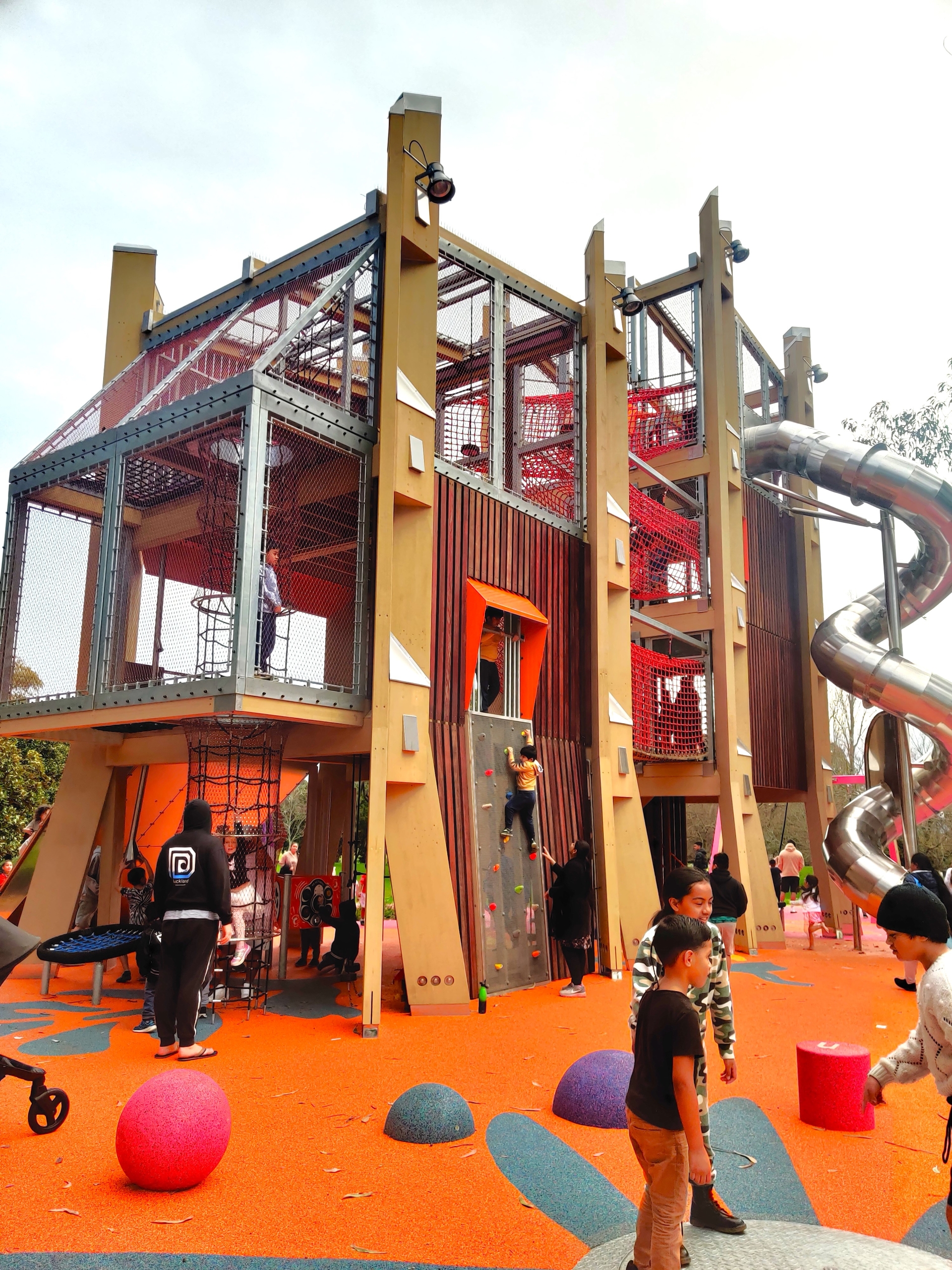
Tallest Playground in NZ – Hayman Park
Project Description
CREDITS: Client: Auckland Council; Eke Panuku / Architect: Athfield Architects and Wala Landscape + Architecture / Engineer: Enovate Consultants / Project Manager: Bluewater Project Management / Contractor: HEB Construction / Mass Timber Installer: Kobe Construction / Product: Glulam
The Project
Auckland, New Zealand
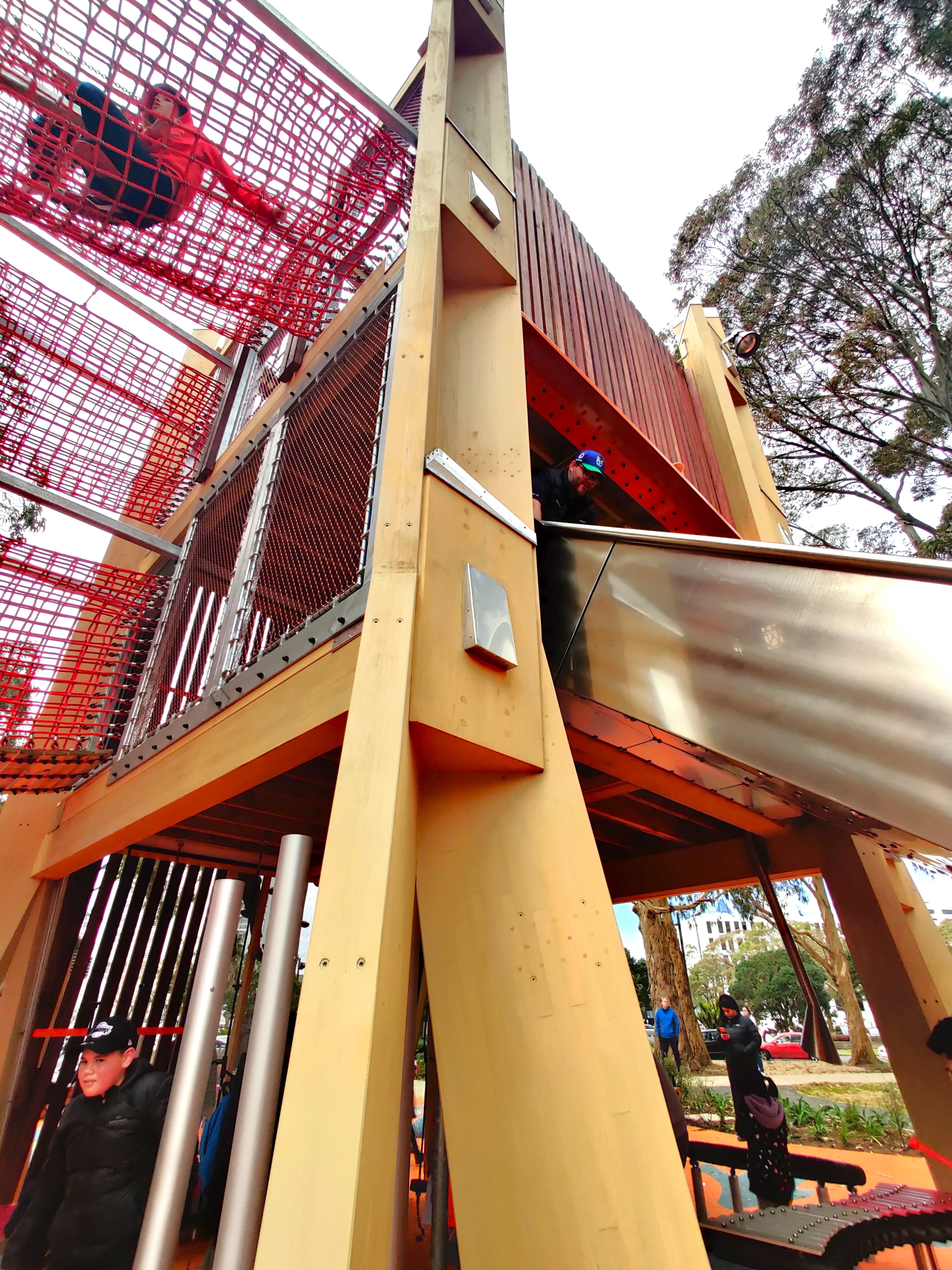
Red Stag TimberLab proudly participated in the new Hayman Park playground development in Manukau. The project involved two large Glulam towers: one 4 stories and the other 3 stories. Currently, the playground stands as the tallest children’s playground in New Zealand, reaching a height of 12.8m. The towers contain three climbing walls, two slides, two flying foxes, four climbing bridges, and multiple walkways between the structures.
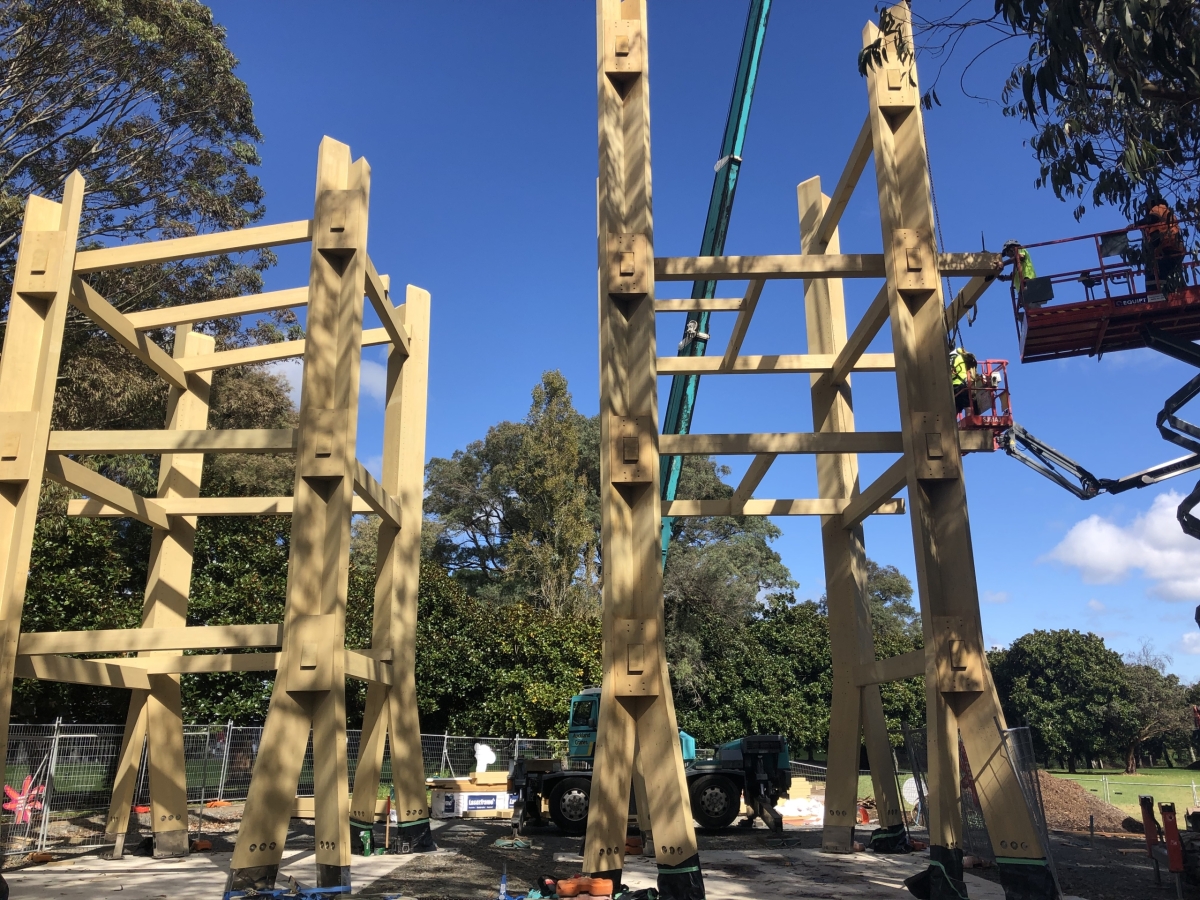
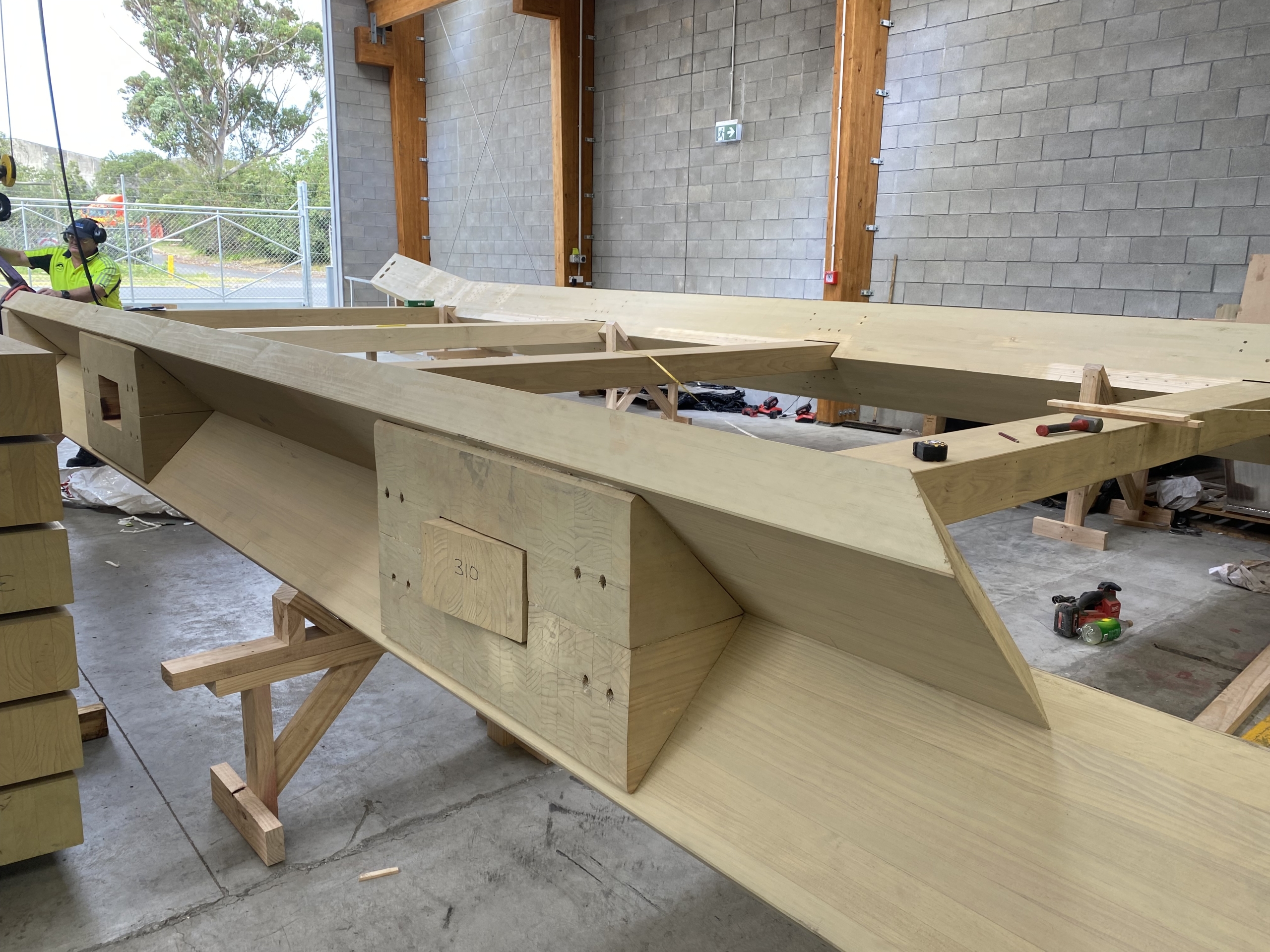
Because the existing playground was still in operation throughout construction, Red Stag TimberLab proposed a full prefabrication option to ensure a rapid site assembly and minimal site disturbance. The Glulam frames were factory pre-fabricated and delivered to site as large H-frames. Dimensions were up to 5.6m wide, 13m long and 2.9 tonne. Tight access and Traffic Management Plans meant all frames were delivered in the early morning. The crane had to be demobilized by 6am for each load.
Multiple suppliers were involved in prefabricating different components for the project. Careful 3D BIM co-ordination was required between all parties to ensure accurate detailing and seamless integration. All Glulam components were modelled in 3D and fabricated on large CNC processing machines to ensure millimetre accuracy. The efficiency of digital fabrication becomes apparent in projects like this, where several components need to be prefabricated and communicated through a centralised BIM digital model.
Prefabrication
By prefabricating the frames, the Glulam elements were able to be rapidly site installed with minimal disturbance. Prefabrication also provided a high level of quality assurance for the project delivery. Taking time off the building site and putting this into a controlled factory setting de-risks the project by having more certainty around cost, quality and timeframe at a very early stage. Site inspections were also a lot faster with consulting teams visiting our factory to provide sign-off on critical connection details when the frames were lying horizontal rather than 13m in the air.
Due to the high level of prefabrication adopted in the project, all frames were installed onsite within hours. Saving time onsite offers significant commercial advantages. These include: lower financial holding costs, lower market risk, and lower preliminary and general overhead expenses. Considering these advantages, prefabricated timber solutions have been proven to be more cost effective than equivalent steel or concrete structures.
Treatment
All the Glulam components are exposed to the weather in the finished structure. Secondly, being a children’s playground, it is vital to avoid toxic treatment chemicals in the timber. To achieve durability requirements, all Glulam raw material was pressure treated with Micronized Copper Azole (MCA) to H3.2. This avoided the need for harmful chemicals such as arsenic. MCA is an environmental alternative to CCA and has benefits associated with visual grade Glulam. Additionally, an oil-based topcoat system was used to provide a colour tint to the timber and offer long-term resistance against moisture ingress.